When a joke gets you killed, when cultural and personal expression is silenced, and when defending your ancestral land brands you a terrorist, freedom of expression is not merely threatened, it is under siege.
At the 59th Session of the United Nations Human Rights Council held in Geneva, Switzerland this past June, Sherwin Dane Zauro Haro, Editor-in-Chief of Humanist Alliance Philippines, International (HAPI), delivered a powerful joint statement on behalf of HAPI, Humanists International, and Filipino Freethinkers. Speaking during the Interactive Dialogue with the UN Special Rapporteur on Freedom of Expression, Haro issued a bold and urgent condemnation of the growing threats to free speech in the Philippines.
Denouncing red-tagging and its deadly consequences, Haro echoed the Special Rapporteur’s findings during her recent visit to the country, asserting that the Philippine government continues to fail in protecting the fundamental right to freedom of expression. He described red-tagging as a weapon disguised as rhetoric, often used by the military and police to falsely label civil society actors, including journalists, Indigenous leaders, and youth advocates, as communists or terrorists.

Haro raised alarm over the growing normalization of red-tagging in the Philippines, which has fueled arbitrary arrests, abuses under the Anti-Terrorism Act, and paved the way for extrajudicial killings. He condemned the terrorist designation of Indigenous leaders from the Cordillera Peoples Alliance and the killings of those who resisted dam projects and environmental destruction in ancestral lands. Haro emphasized that Indigenous communities are frequently criminalized for defending their lands, and youth activists (some as young as 18) are increasingly targeted.
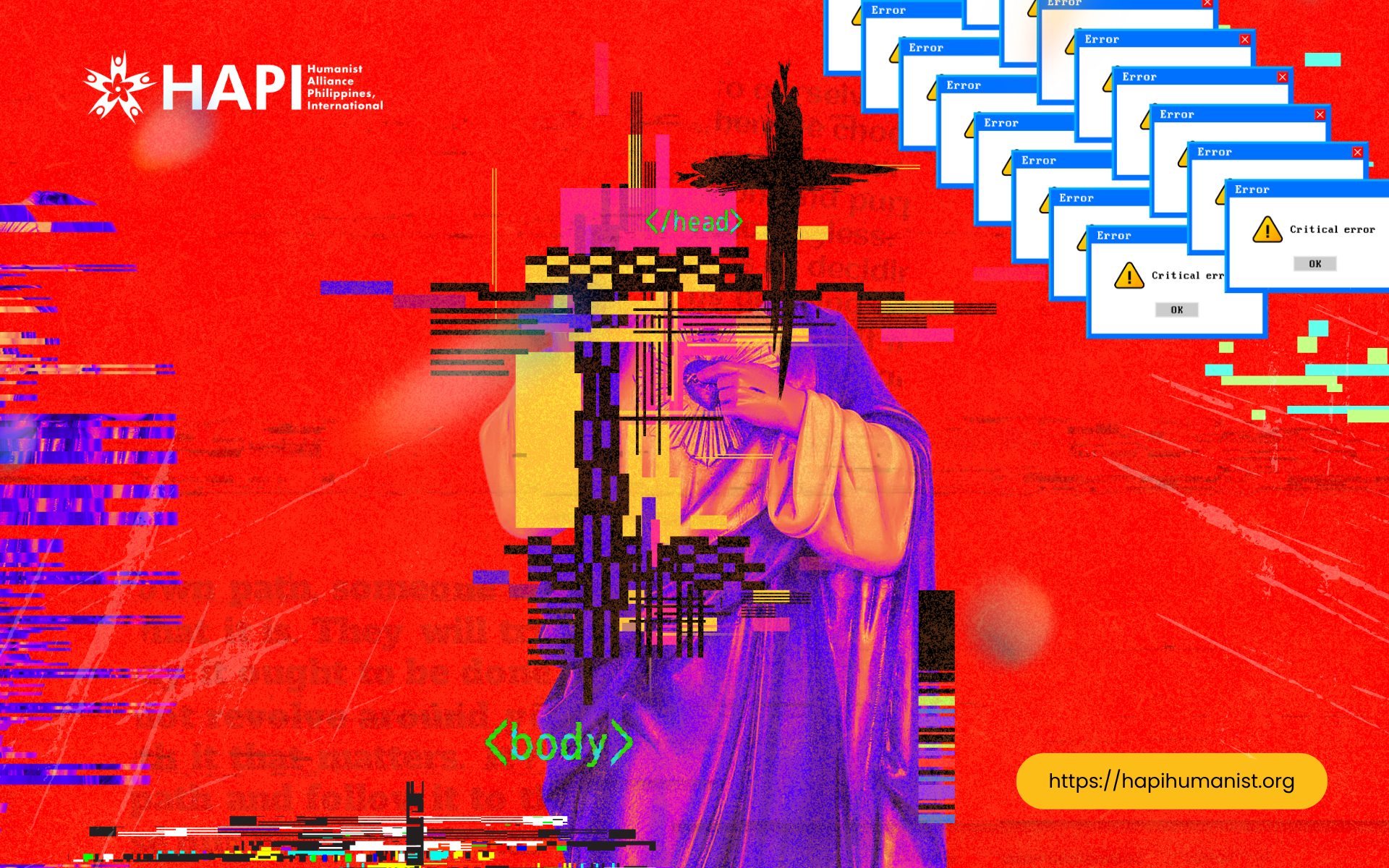
Addressing the growing culture of artistic repression, Haro shed light on the chilling case of comedian Gold Dagal, who was shot dead during a live show after receiving numerous threats for his satirical takes about Christianity. Haro also mentioned the double standards faced by drag entertainers like Pura Luka Vega, an LGBTQ+ drag performer twice arrested for dressing as Jesus Christ in a rock rendition of “Ama Namin” (“Our Father”).

Haro’s speech echoed cases of secular repression in the Philippines over the past decade and a half, which saw criminal cases being filed against the likes of Carlos Celdran, who was convicted in 2013 for “offending religious feelings”; and Mideo Cruz, who faced death threats and legal action for his art installation Poleteismo.
Concluding his statement, Haro issued an appeal to the Philippine government: repeal laws that criminalize peoples’ right to free speech and hinder creative expression, particularly Article 201 of the Revised Penal Code and provisions of the Anti-Terrorism Act. He called for an end to all forms of red-tagging online and offline, and the dismantling of state violence that targets artists, human rights defenders, and indigenous people.
With his message, Haro reminded the Human Rights Council that red-tagging does not exist in a vacuum. It is rooted in a broader system of inequality and the long shadow of historical neglect. He urged the Council to recognize that confronting red-tagging in the Philippines means confronting the deeper injustices faced by Indigenous communities – people whose lands are seized, whose identities are erased, and whose voices are silenced under the guise of national security.
Haro brought this issue internationally, making clear that you can’t talk about freedom and human rights in the Philippines without putting struggles and oppression front and center.
SUPPORT OUR MISSION
Enjoyed this article?
Give once, or become a monthly supporter — every gift helps HAPI continue its work for humanism across the Philippines.

Powered by 
Friend of HAPI
Humanist Supporter
HAPI Humanist Advocate
Humanist Champion
Cancel anytime from your PayPal account.