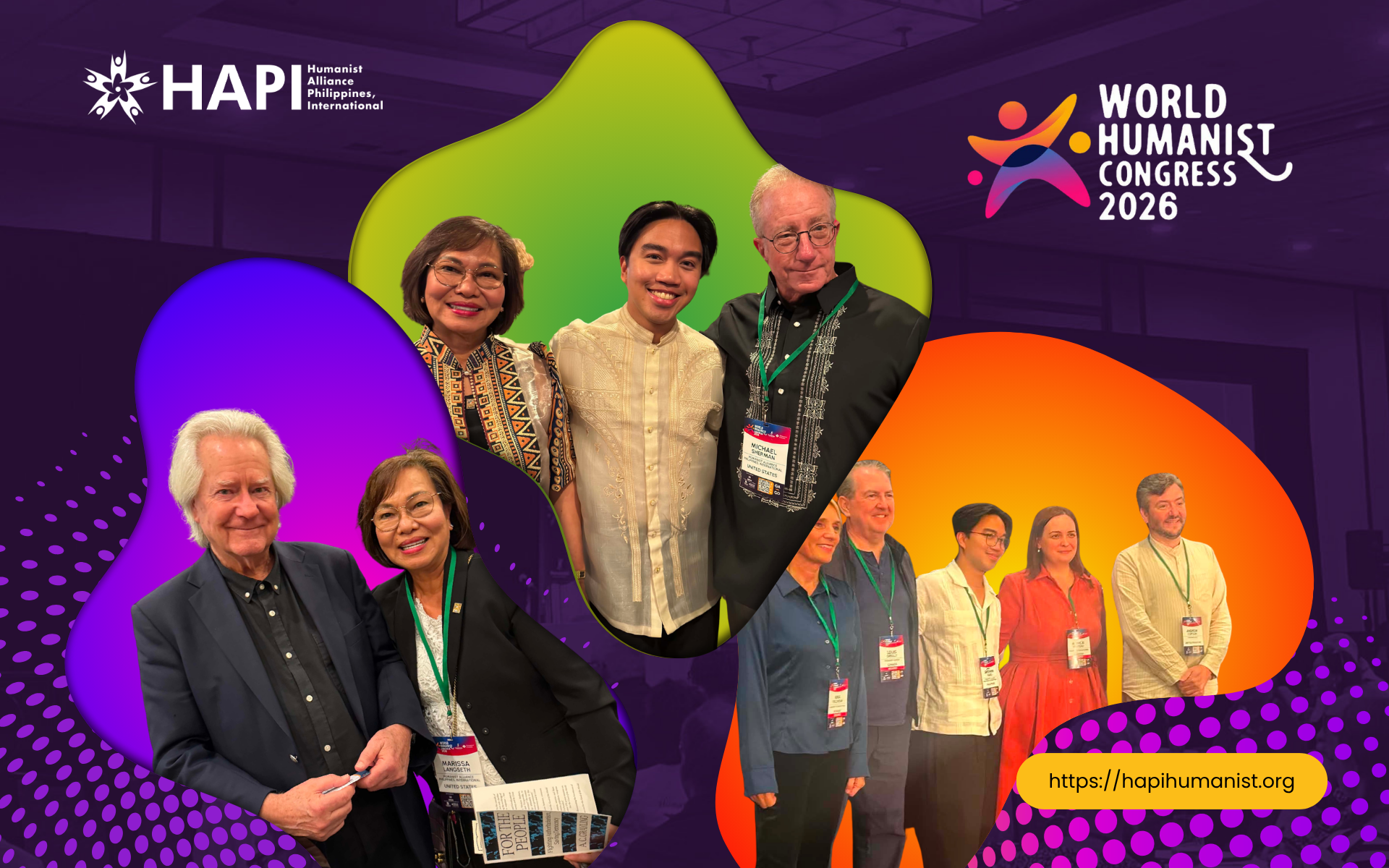
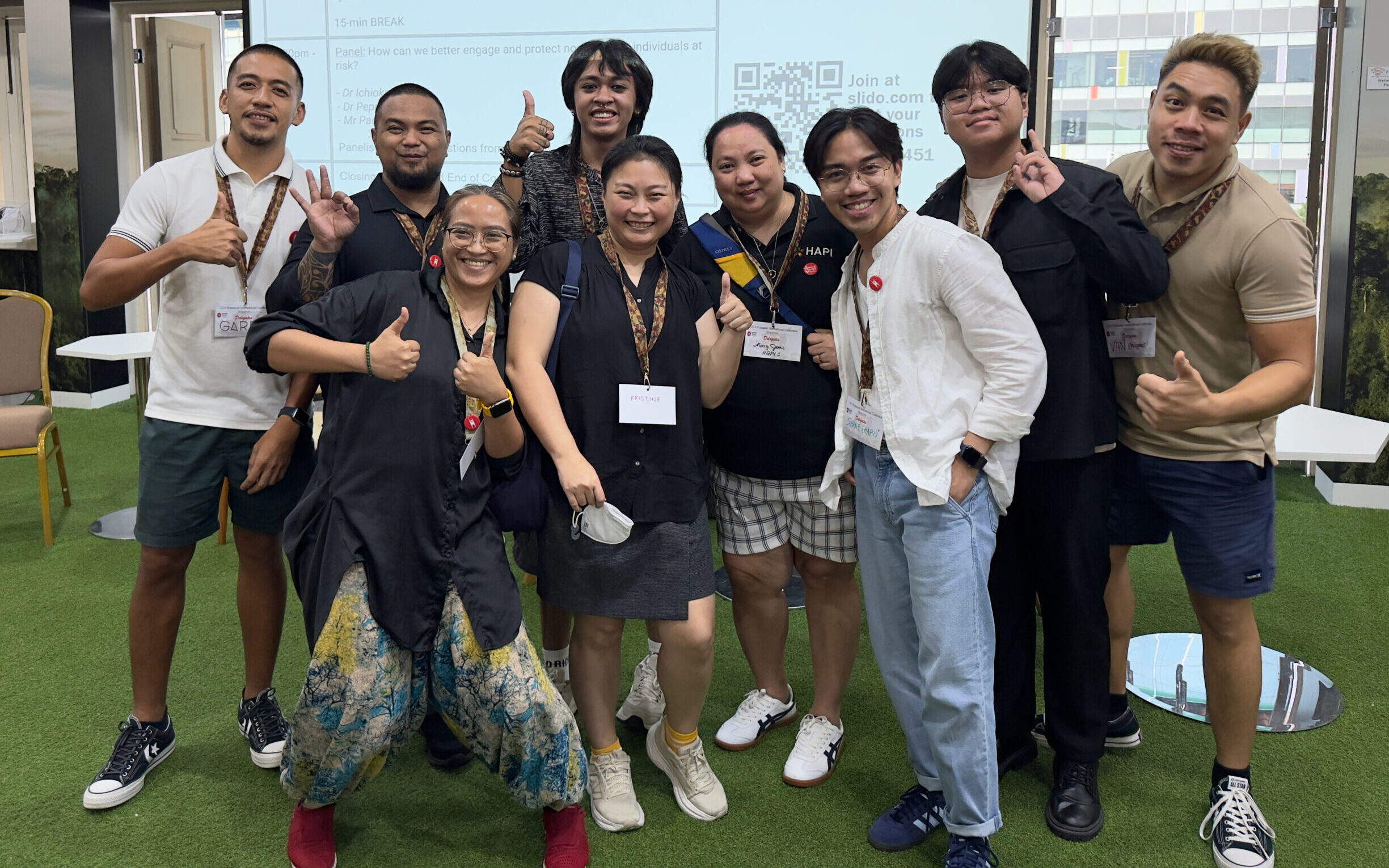
I’m still buzzing from an incredible experience at the International Humanist Conference and General Assembly held in Luxembourg this past July 5-6, organized by AHA Luxembourg. It was a privilege to help represent Humanist Alliance Philippines, International (HAPI) alongside our CFO, Mutya Valenzuela. With us also was Javan Lev Poblador, our ex-HAPI CEO, now HI Membership Officer. This was my second time receiving a generous travel grant from Humanists International (HI) – a testament to their commitment to fostering a truly global humanist movement.


Day One: The Conference on Scientific Literacy
The conference, themed “From Awareness to Action: Strengthening Open Societies through Scientific Literacy,” was exactly what I needed to hear. In a world increasingly grappling with misinformation and challenges to democratic norms, the talks were a powerful reminder of why scientific literacy is not just important, but absolutely vital.
I found myself nodding vigorously during the first session. Christian Meyers delivered a compelling talk titled “Obscurantism strikes back? Anti-Science & Anti-Democracy as two sides of the same coin,” illustrating the historical struggle for reason and scientific inquiry and highlighting the urgent need for scientific literacy today. Following him, Clemens Lintschinger then provided insights with his talk, “Why democracies need strong science: Learning from criticism,” expertly demonstrating how a vibrant democracy inherently depends on independent, transparent, and self-correcting science. Both speakers underscored how foundational these ideas are in the face of current challenges to academia and science.
 The second session, aptly titled “Inspiring Practices,” showcased concrete examples of how humanist organizations are putting “awareness into action” on the ground. We heard about innovative approaches to communicate science and make it reach all people.
Among the presentations I made note of were: Hanna Siemaszko‘s SciLux podcast, bringing scientific discussions to a wider audience. Monica Belițoiu, the coordinator of the Scientific Calendar project, also shared her valuable experience with her organization’s initiative to distribute printed Scientific Calendars to schools, making scientific information accessible to students. Boris van der Ham shared insights from the “Human for All Seasons” project, which aims to gather diverse secular sources of inspiration. This beautifully illustrated how science is not just about facts, but a way of understanding ourselves and our shared human nature. Michele Weber creatively explored “The Power of Emotion in Scientific Literacy,” demonstrating how to make science memorable and engaging with “WOW, Aaaah, and Haha” effects, e.g. game shows where the questions focus on science, pitching theses within 10 minutes, contest-style. These “Inspiring Practices” truly showed how humanists are actively building a worldview that’s firm and resilient against undue influence.
Day Two: First-Time Voter at the General Assembly
The weekend’s events wrapped up with the General Assembly (GA) of HI delegates from more than 50 countries to discuss important issues and elect new leaders. This trip was important for me personally because I got to represent HAPI and cast our vote, influencing the future of the global humanist movement.
As a Filipino humanist, witnessing this kind of international backing gives me hope and reminds me why humanism should be more visible in our country.
The Assembly was notable for the election of Maggie Ardiente as the new President of HI. Ardiente is the first woman of color to hold this position. She was born in San Diego, USA, to Filipino parents, and was nominated by HAPI among other organizations. Her background connects her to the global community she now leads. Maggie spoke about her pride in carrying on the legacy of defending human rights and freedom of thought, highlighting the need to combat anti-democratic and anti-scientific forces. Joining her on the new Board are Monica Belițoiu from the Romanian Secular Humanist Association, Nina Fjeldheim from the Norwegian Humanist Association, and Fraser Sutherland from Humanist Society Scotland.
 The Assembly also marked the end of an era with outgoing President Andrew Copson, who wrapped up ten years in office. Copson was recognized for changing Humanists International by improving its governance and expanding its leadership. In his farewell, Andrew stated, “Humanism is simply the best idea in the world… together, we can build a more just and compassionate future.” The Assembly honored Copson, presenting him with one of the 2024 Distinguished Services to Humanism Awards. A proud moment for HAPI was when Mutya Valenzuela, HAPI’s CFO and a member of HI’s Board of Trustees, presented Andrew with an Honorary Award for his contributions to our organization.
Roslyn Mould, Vice President of HI, gave an inspiring closing speech, urging everyone to do more to promote humanism, critical thinking, and the defense of human rights. She stressed that people deserve more than comforting illusions and that we must take our place at the table instead of waiting for an invitation.
One powerful moment was the first in-person meeting with Mubarak Bala from Nigeria. After being imprisoned for his humanist activism and finally released due to the efforts of humanist organizations worldwide especially HI, his presence showed resilience, justice, and the strength of global support. As Leo Igwe said, HI is a vital refuge for humanists everywhere. As a Filipino humanist, witnessing this kind of international backing gives me hope and reminds me why humanism should be more visible in our country.
My Key Takeaways and Future Reflections
The conference was an eye-opener, shedding light on the strategies we need to adopt for the humanist movement. A major takeaway was our shared responsibility to reclaim enlightenment and advocate for reason. We acknowledged that anti-scientific stories and misinformation pose serious threats to academia and open societies – a challenge Andrew Copson described as a “long and stretched” fight that’s far from finished. From Clemens Lintschinger’s talk, I gained insights on the “paradox of democracy” in relation to science. Trusting science is crucial, but it doesn’t mean we should accept everything scientists say without question. The public has every right to ask questions, and scientists should improve their storytelling skills, aiming to engage people without acting superior.
 The sessions emphasized how essential it is for humanists to show up and claim their space in public discussions. We need to push for AI education in schools and directly tackle anti-rational agendas. The importance of linking technology to the humanities was highlighted as a crucial way to prevent the rise of authoritarianism. Michèle Weber’s session pointed out how easily emotions can be influenced, reminding us that we need to combine engaging communication with strong critical thinking to fight against manipulation and promote rational understanding in the public sphere.
This conference was more than just about gaining knowledge; it felt like a meaningful connection that reinforced my role in this important global movement. It made me realize that “From Awareness to Action” is more than just a catchy phrase; it’s a guiding principle. I’m excited to channel these insights and renewed motivation into HAPI’s initiatives, aiming to strengthen open societies through critical thinking and empathy.
SUPPORT OUR MISSION
Enjoyed this article?
Give once, or become a monthly supporter — every gift helps HAPI continue its work for humanism across the Philippines.

Powered by 
Friend of HAPI
$10
/ month
Humanist Supporter
$25
/ month
HAPI Humanist Advocate
$35
/ month
Humanist Champion
$50
/ month
Cancel anytime from your PayPal account.