Did you know? Ancient Visayans were SEXPERTS!
By Junelie Velonta
HAPI Scholar
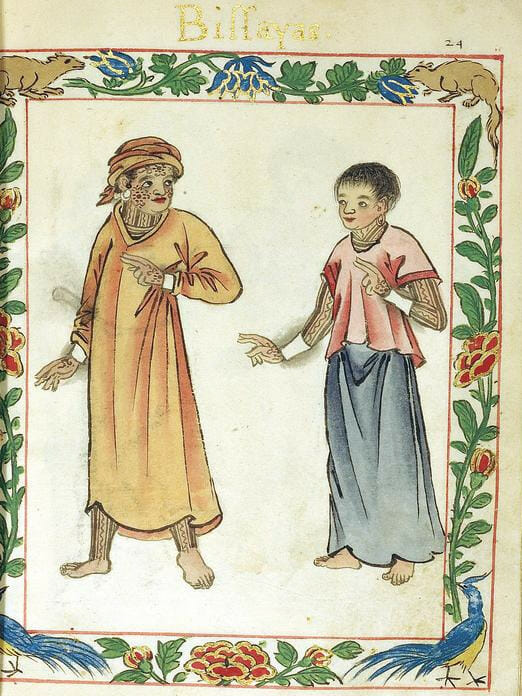
A 𝑝𝑖𝑛𝑡𝑎𝑑𝑜’𝑠 tattoos were records of his skills in battle. However, it is also a show of their prowess in bed! Sex was so normalized amongst the precolonial Visayans that the first Spanish missionaries sent to the islands thought that Visayan men and women had “extraordinary sexual appetites” and that they were “doing satanic deeds.” 𝑲𝒊𝒏𝒌𝒚.
Though it is common (some would say mistaken) knowledge that Filipino men are “𝑠𝑚𝑎𝑙𝑙 𝑑𝑜𝑤𝑛 𝑡ℎ𝑒𝑟𝑒,” it did not stop them from using other methods to enhance their nighttime activities. Genital beading, i.e. the installment of ornaments into or onto the penis to provide better stimulation for the female, was a common practice among men. Antonio Pigafetta even states that Visayan women would choose not to have sex with a man who did not have any form of ornament installed into his organ.
These ornaments took many forms. Simplest were small metal balls, called 𝑏𝑜𝑙𝑖𝑡𝑎𝑠, which were inserted into the skin of the shaft. Other forms were also recorded by the Spanish chroniclers, with Visayan men saying that different tribes had different “tools for the job.” However, the most complex would have to be the 𝑠𝑎𝑘𝑟𝑎, a complex cog-like instrument attached onto the penis. The 𝑠𝑎𝑘𝑟𝑎 comes in many forms and excavated ones have been found to have intricate and elaborate designs.
Though this trivia could be a source of entertainment, a few flustered laughs here and there, it is important to discuss the society that enabled the Visayans to be open about sex. This state of living was only possible because most precolonial men and women had equal rights. Both men and women had the right to own property. Legitimate sons and daughters inherited equally. While it is true that an unwed daughter was treated almost as a bargaining piece by her father, the bride gains rights equal to her husband’s after the wedding, and she had the right to divorce said husband.
And divorces were common too. The wife could cite many reasons for legal separation, from incompatibility to abuse, that W.H. Scott wrote that “a man or woman who had been married only once was rather the exception than the rule.” Subsequent marriages were common and having had more than one partner was not looked down upon, especially among the common folk. In the end, the precolonial Visayans could have only attained their mastery and liking of sex because of the equal standing of the man and the woman.
Sources:
De Leon, J. I. (2020, May 12). (dissertation). Penis Piercing and the Status of Women in Pre-colonial Visayan Societies. Retrieved January 16, 2022, from https://medium.com/…/penis-piercing-and-the-status-of….
Scott, W. H. (1994). Barangay: Sixteenth-Century Philippine Culture and Society. Ateneo de Manila University Press.
SUPPORT OUR MISSION
Enjoyed this article?
Give once, or become a monthly supporter — every gift helps HAPI continue its work for humanism across the Philippines.

Powered by 
Friend of HAPI
Humanist Supporter
HAPI Humanist Advocate
Humanist Champion
Cancel anytime from your PayPal account.