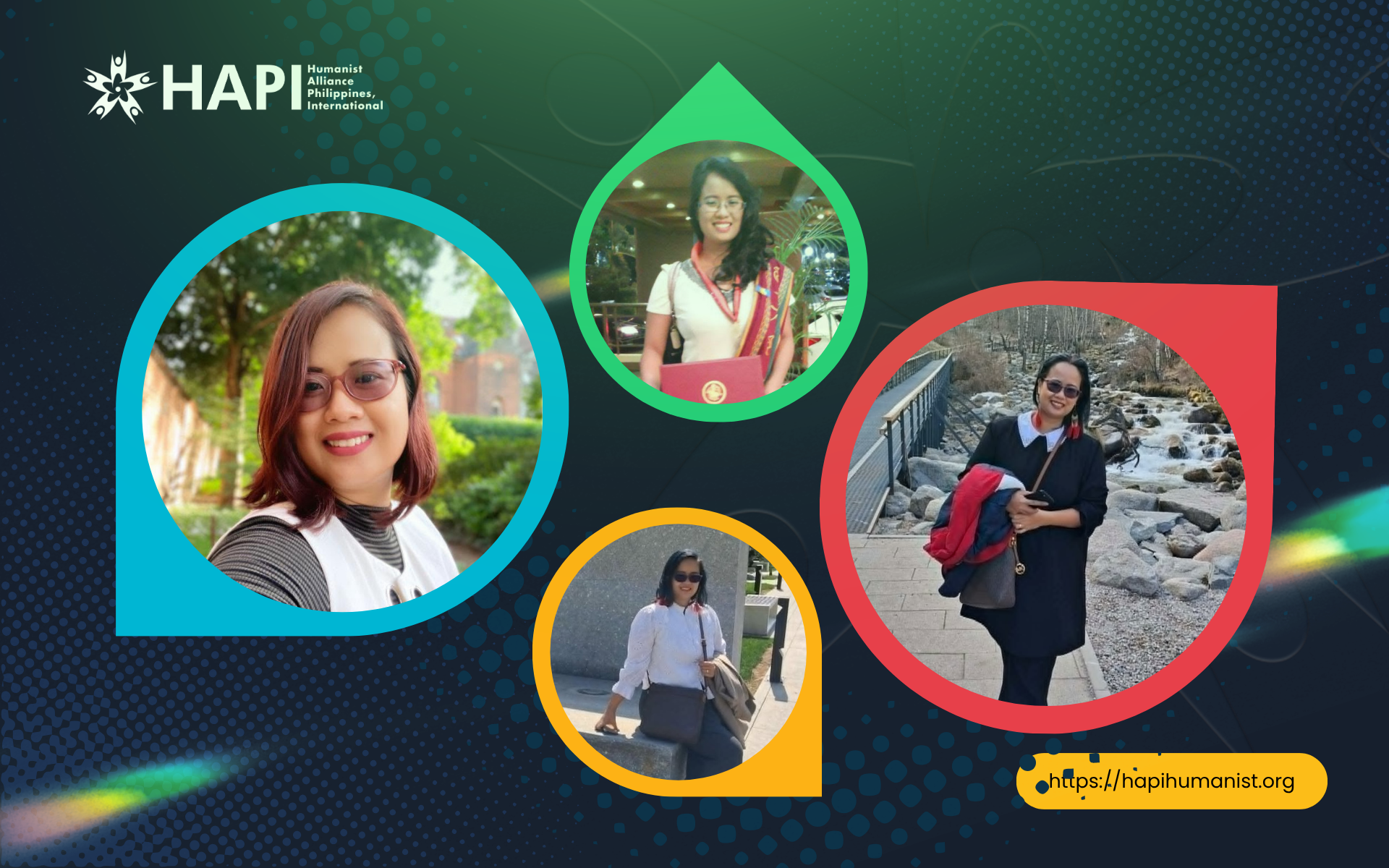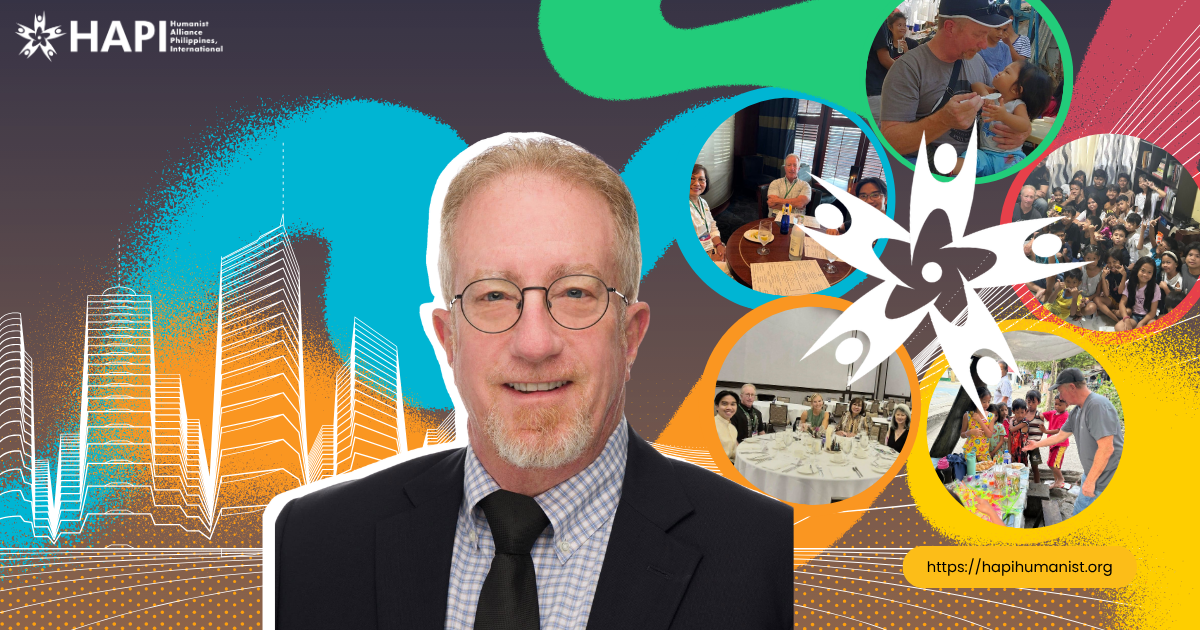
A city is more than concrete, steel, and zoning laws. It is also the people who live in it, the communities they build, and the dignity they deserve. For Michael Sherman, AICP, longtime city planner and Chairman of Humanist Alliance Philippines, International (HAPI), building better communities has become more than a profession. It has become an expression of the values that have shaped his life: compassion, empathy, human dignity, and the belief that people deserve to be heard.
After decades of city planning in the USA, Michael’s (or Mike, as he is fondly called) altruistic spirit drew him to secular humanism – particularly in the Philippines, where his leadership of the HAPI Board of Trustees has benefited thousands of lives over the years. But behind these accomplishments is a life shaped by adversity. His journey from a difficult childhood in Florida to becoming an advocate for marginalized communities is a story about character: how a person can endure injustice without allowing it to determine the kind of person he becomes.
Building a Life of Purpose
Mike’s accomplishments today reflect a lifetime of putting his values into practice. As a city planner, he has spent decades thinking about how communities function and how the built environment can better serve the people who live in it. As an advocate, he has found ways to apply that same concern for people beyond the technical aspects of planning.
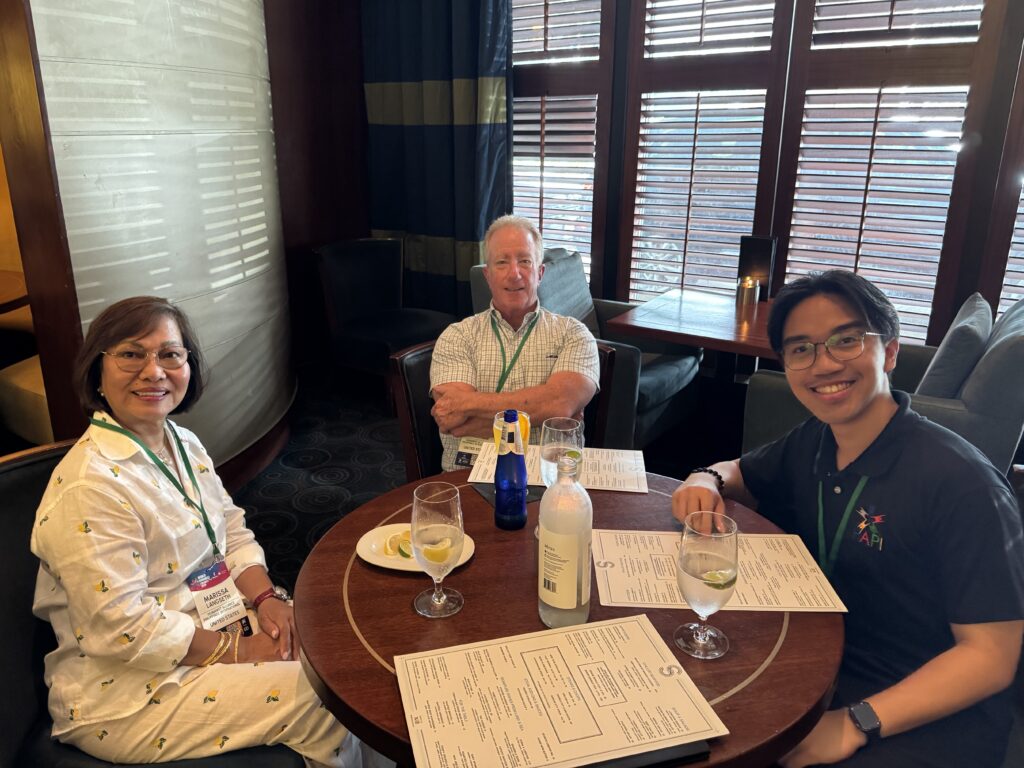
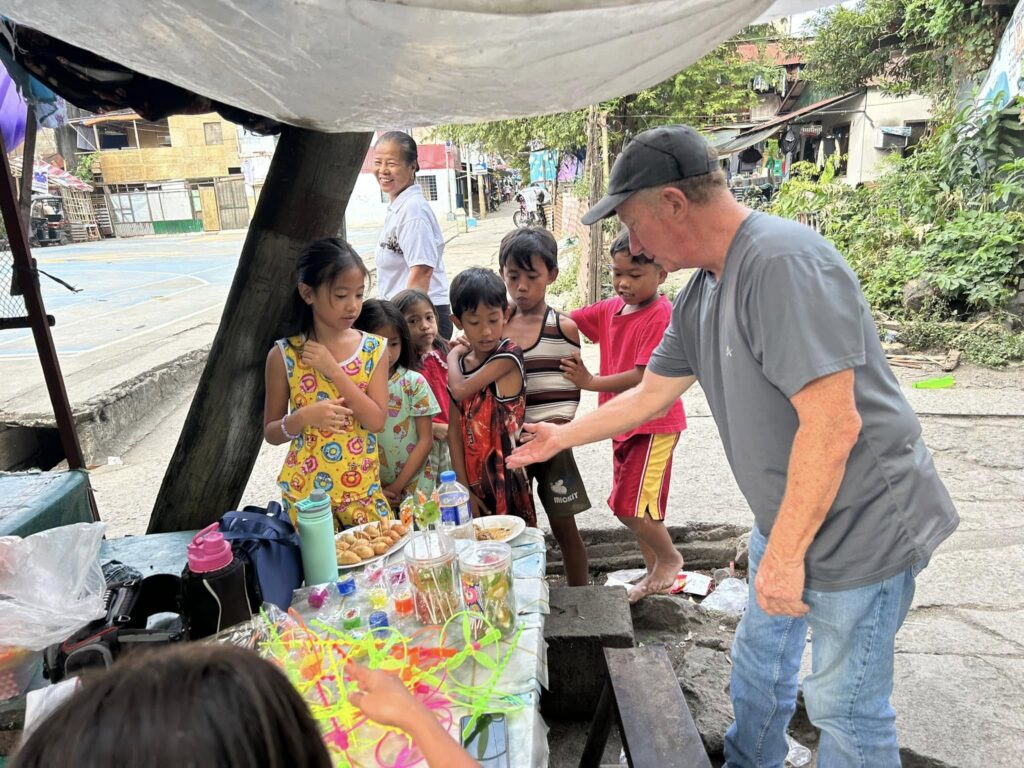
Working with Filipino communities as a non-Filipino leader requires humility and an openness to perspectives different from his own.
His influence as our organization’s Chairman is particularly notable because it is not just grounded in authority, but in listening. Working with Filipino communities as a non-Filipino leader requires humility and an openness to perspectives different from his own. Mike believes that one of the most important lessons he has learned throughout his career is to listen before trying to provide an answer.
“One of the best lessons I have learned is to sit back and listen,” he explains. “Listen to what people are saying and not think so much about my reply.”
It is a simple principle, but it says much about the kind of leader Mike has become. Rather than assuming that he already knows what people need, he makes room for them to speak for themselves. That approach allows local voices to help shape HAPI’s work and keeps its advocacy connected to the communities it hopes to serve. His successes, however, are not simply the result of professional experience. They also reflect the strength of character he developed long before he became a city planner or humanist advocate.
A Strength Forged by Injustice
In a way, these successes were a kind of victory lap for someone who endured much pain in childhood.
Mike grew up in Florida in a family where religion played a significant role. Although his parents came from different Christian traditions, religious belief was often intertwined with strict expectations, conflict, and fear. His childhood exposed him early to the complicated ways that authority and belief can affect a person’s sense of safety and belonging (which is as volatile a theological cocktail as one can mix). Those experiences became even more difficult during his teenage years. At 17, Mike was placed in a behavioral modification program that was presented as a means of helping troubled young people. Instead, he experienced an environment characterized by extreme control, deprivation, psychological manipulation, and abuse.
For more than a year, he lived within a system where young people were subjected to harsh treatment under the authority of a program that claimed to be helping them. The experience represented a profound injustice: someone who was still a teenager was placed in a situation where his vulnerability was used against him rather than met with care. The experience did not end when the program did. Its effects followed Mike into adulthood, shaping his relationship with authority, religion, and the institutions that claimed to know what was best for him.
Mike began examining the beliefs he had inherited rather than simply accepting them.
College brought another period of questioning. Having already experienced profound upheaval at home and in his teenage years, Mike began examining the beliefs he had inherited rather than simply accepting them. He saw a growing disconnect between the compassion that religious teachings often preached and the behavior he had encountered in his own life.
The years that followed were also marked by loss. Friends were leaving, and the religious faith he had been taught to depend on no longer provided the answers or comfort he had expected.
“Even my praying and crying out to the Lord did nothing to help.”
His eventual departure from organized religion was therefore not simply an intellectual rejection of faith. It was the result of years of questioning, suffering, disappointment, and searching for a moral framework that made sense of the world he had experienced. He turned to books and began exploring both religious and secular humanist thought. Over time, he discovered secular humanism and found in it an approach to morality that did not require belief in a supernatural authority. Human beings could choose to care for one another because suffering mattered and because people had inherent dignity.
For Mike, that realization was transformative.
A Secular Homecoming
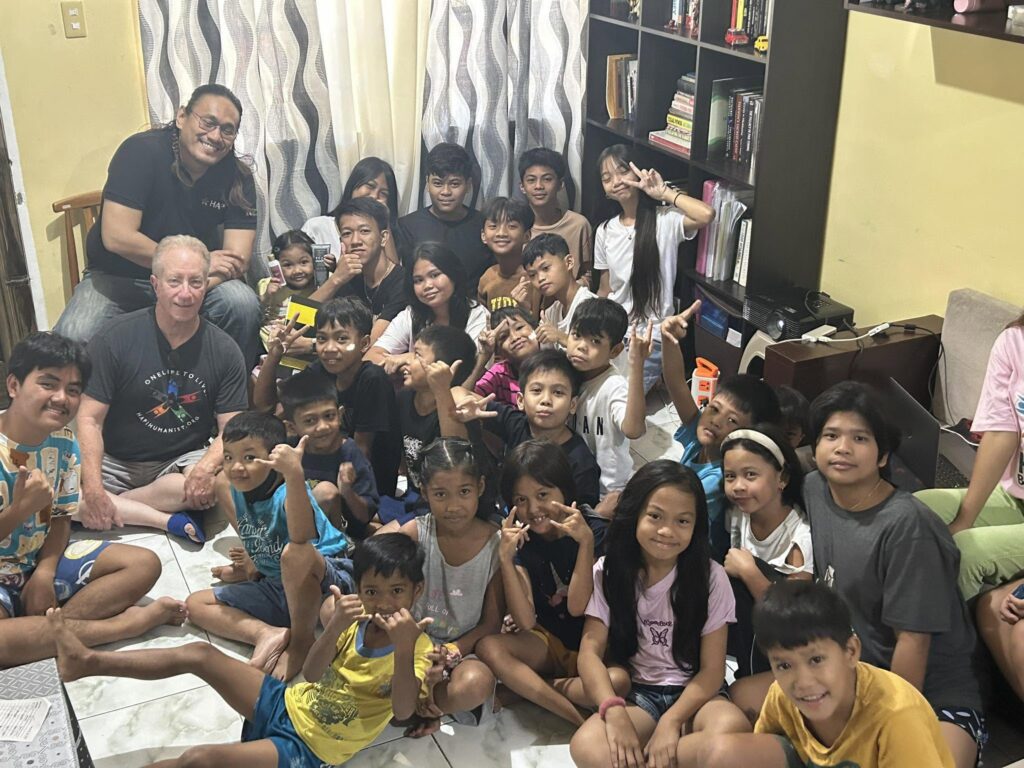
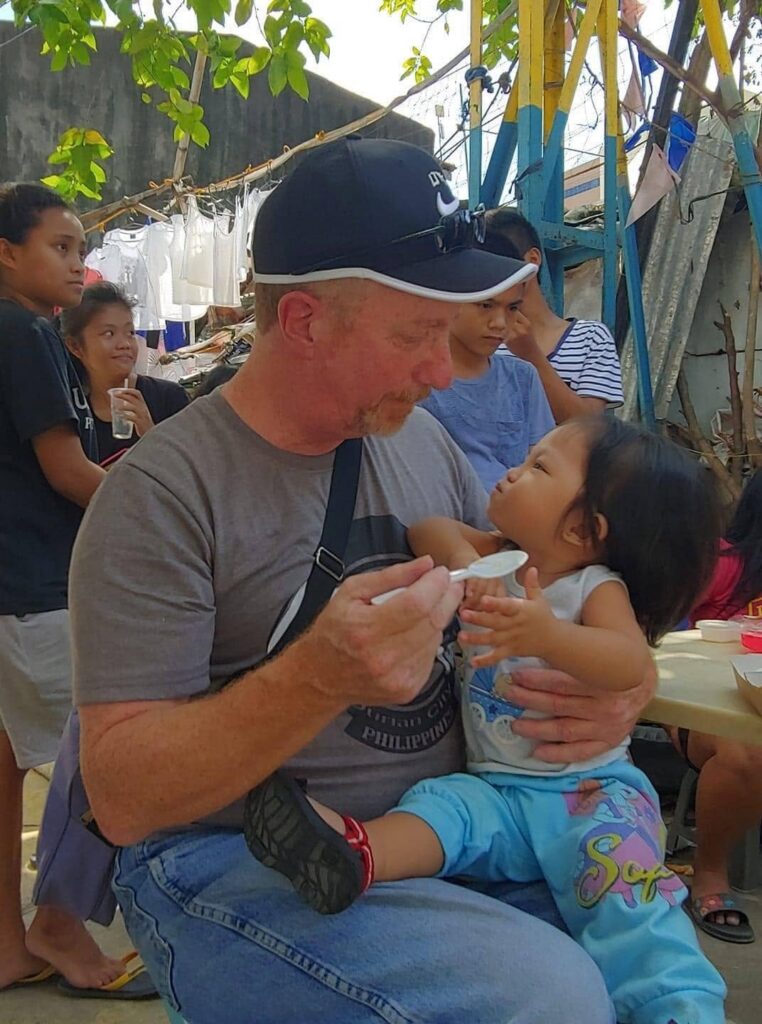
If Mike’s early life taught him what happens when people are denied compassion, humanism gave him a framework for practicing it. His introduction to HAPI opened the door to a community where his values could become action! After discovering the organization online (of course it was through Facebook), he became drawn to its grassroots efforts to address human suffering and improve the lives of marginalized communities. His first visit to the Philippines for HAPI Con 2017 marked the beginning of a deeper involvement in the organization’s work. Since then, his advocacy has become a practical expression of his humanist beliefs.
“Putting my beliefs into action,” Mike says, defines his activism.
His philosophy can be summed up in another statement he often returns to: “Secular humanism is my passion; humanity and human rights are my religion.”
The statement captures the connection between his past and his present. Having experienced what it feels like to be powerless within systems of authority, Mike has chosen to devote his time to helping people have greater agency, dignity, and opportunity. His work as a city planner and his work as a humanist advocate may look like they occupy different worlds, but they share the same foundation. Both ask a fundamental question: How can we create environments where people are treated with dignity and given the opportunity to live better lives?
Character That Builds Communities
Perhaps the most significant thing Mike brings to HAPI is not simply his professional background or years of advocacy experience, but the character forged through everything he has experienced. He could have allowed the injustices of his childhood to make him cynical about people. Instead, they strengthened his determination to treat others differently. He could have responded to harmful authority by becoming unwilling to trust anyone. Instead, he learned the value of listening. He could have allowed painful experiences with religion to become a rejection of morality itself. Instead, he built his own ethical framework around compassion and human dignity.
That strength is what continues to benefit HAPI today.
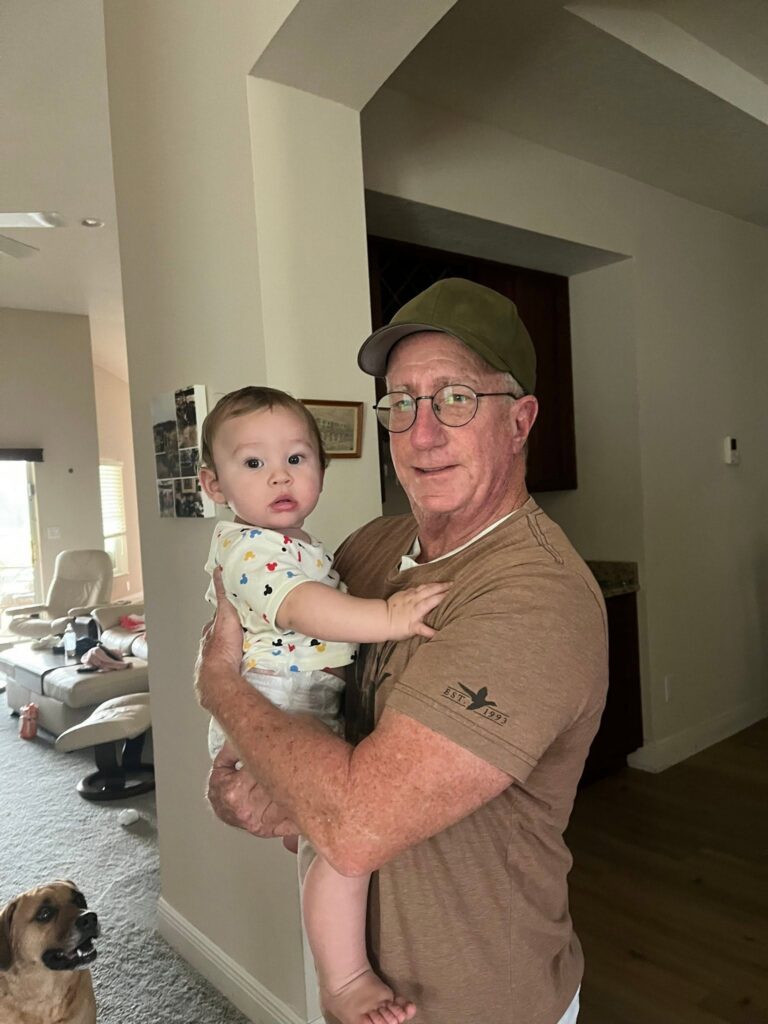
Leadership in a community-based organization is not only about having ideas or making decisions. It requires patience, empathy, resilience, and the willingness to recognize that other people’s experiences matter. These are qualities Mike has cultivated throughout his life, and they influence how he approaches both advocacy and leadership. His belief that compassion is the basis of morality extends beyond any religion or ideology. It is reflected in the way he thinks about communities, human rights, and even the responsibilities people have toward other living beings.
Despite everything he has experienced, Mike remains hopeful about humanity.
“I think that humans are generally good.”
People, that optimism is perhaps one of the clearest signs of his strength of character. After experiencing injustice himself, he still chooses to believe in people’s potential.
Mike’s life in general, reflects the humanist idea of being good without God. He does not look to an afterlife to give his life meaning. Instead, he finds meaning in the life that exists now, and in what people can do to make that life better for one another. His story is not simply about leaving religion, becoming a humanist, or rising to leadership within HAPI. It is about what he chose to do with the experiences that shaped him.
SUPPORT OUR MISSION
Enjoyed this article?
Give once, or become a monthly supporter — every gift helps HAPI continue its work for humanism across the Philippines.

Powered by 
Friend of HAPI
Humanist Supporter
HAPI Humanist Advocate
Humanist Champion
Cancel anytime from your PayPal account.